Bookbinding sits at a perfect intersection of precise technique and patience. Here are three of the most approachable techniques anyone can learn at home with simple tools.
Tools You’ll Need
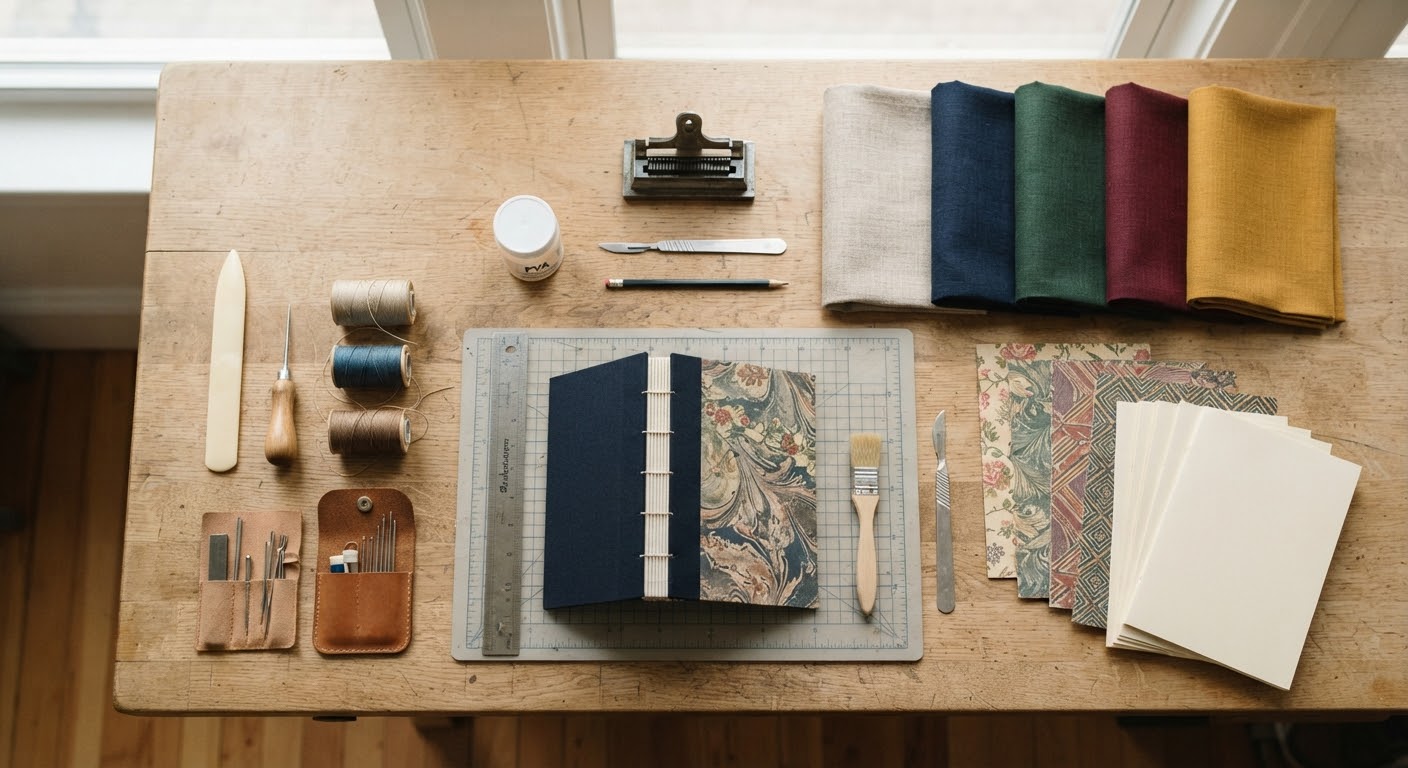
- A bookbinding needle and linen thread
- An awl for punching accurate holes through paper and cover stock
- A bone folder for crisp, tear-free creases
- A ruler, craft knife, and paper-safe adhesive
1. Saddle Stitch
The simplest of the three — fold sheets in half, punch two to four holes along the spine, and stitch thread through them. Ideal for thin notebooks, zines, or booklets under 40 pages.
2. Coptic Stitch
Originating in ancient Egypt, this technique leaves the spine fully exposed, with crossing X-shaped stitches linking each signature. Its biggest advantage: the book can lie completely flat when opened, which makes it a favorite for sketchbooks.
3. Japanese Hole Binding
Holes are punched along the edge of the paper (rather than folding sheets in half), and thread is woven through in a decorative pattern visible on the cover. This method skips folding signatures entirely, making it well suited to thick or single-sided paper.
A Note on Grain Direction
This is the detail beginners overlook most: paper has a “grain” that runs in one direction. The spine fold needs to run parallel to the grain — fold against it, and the book will resist lying flat and is prone to cracking at the spine over time.