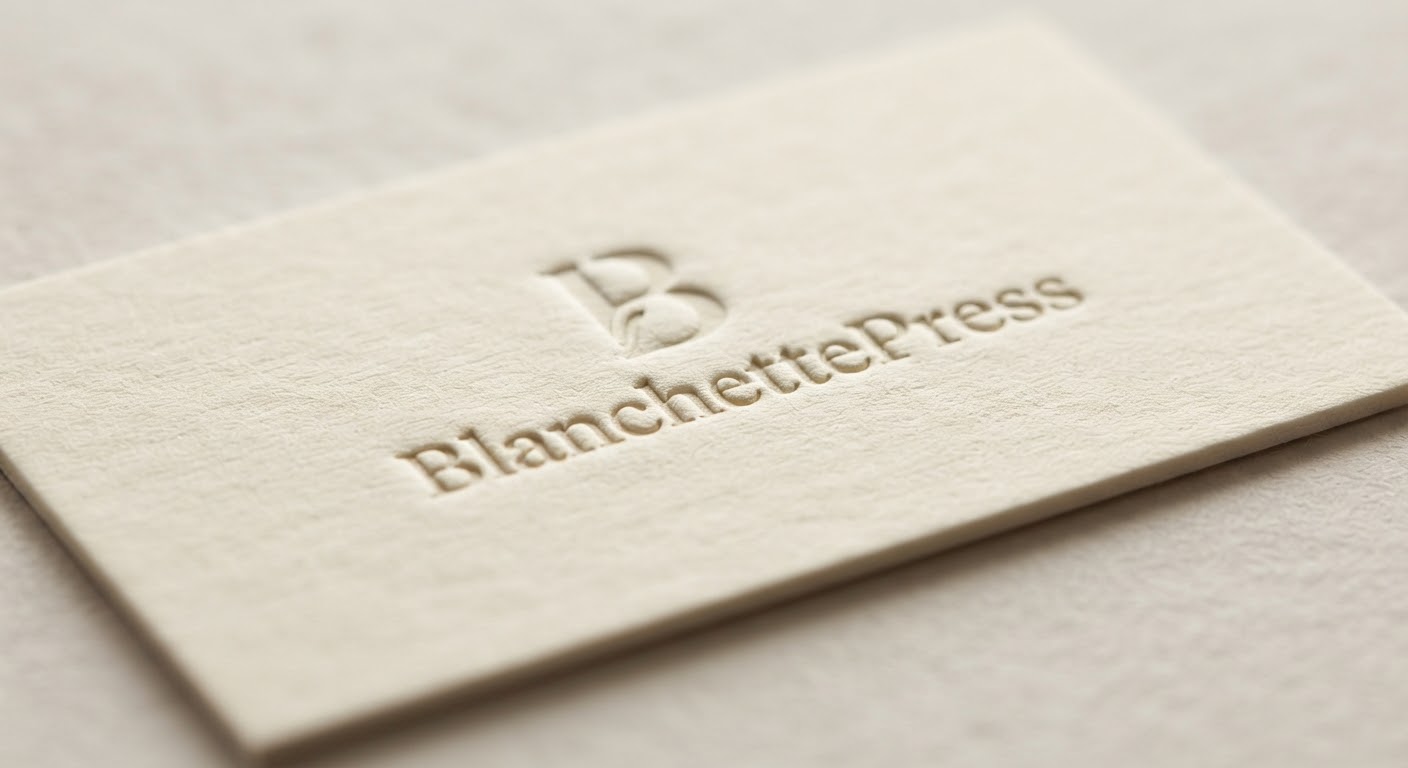
In an age of instant digital printing, letterpress — a technique dating back to the 15th century — still holds a special place among people who care about material. It’s not nostalgia; it’s a deliberate aesthetic choice.
Definition: What Is Letterpress?
Letterpress is a relief printing method that presses an inked raised plate (typically metal or photopolymer) directly into paper under high pressure, leaving the characteristic debossed impression you can both see and feel.
A Brief History
The technique traces back to Johannes Gutenberg’s press — the foundation of the entire modern publishing industry. For over 400 years, letterpress was the dominant printing method, until offset printing overtook it in the mid-20th century for its speed and lower cost.
The Process
- Plate-making: text and imagery are engraved or cast in relief on a metal or polymer plate.
- Inking: ink is rolled evenly across the raised surface of the plate.
- Impression: paper is pressed into the plate under significant mechanical force — this is what creates the signature debossed texture.
- Drying: traditional oil-based inks can take anywhere from a few hours to a full day to cure.
Best Paper Stocks
Letterpress needs thick, uncoated paper — cotton stock at a minimum of 300gsm is ideal — to hold a crisp impression without tearing or rippling.
Premium Applications
Today, letterpress is most valued for luxury business cards, wedding invitations, and limited-edition book covers, where tactility becomes part of the brand experience — something digital printing simply can’t replicate.