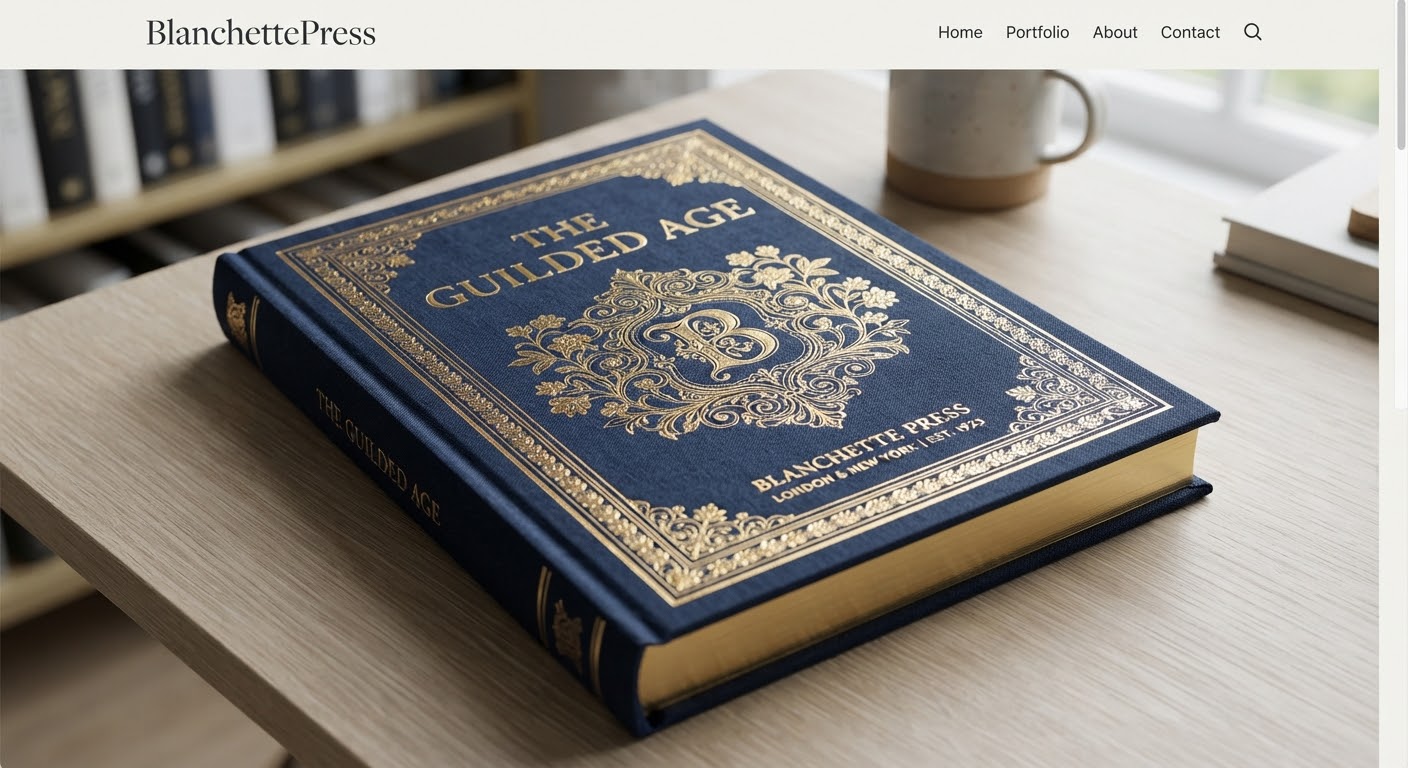
Finishing is the step most often overlooked in the design process, yet it’s what decides whether a printed piece actually connects emotionally with whoever holds it. Foil stamping and embossing are the two most sought-after techniques in premium print.
What Is Foil Stamping?
Foil stamping uses heat and pressure to bond a thin layer of metallic film — gold, silver, copper, or other finishes — onto paper via an engraved metal die. The result is a reflective surface that ink alone simply can’t reproduce.
What Is Embossing (and Debossing)?
Embossing uses a mechanical die to create a raised or recessed three-dimensional image on paper — emboss pushes the image up, deboss presses it down. Both create visual and tactile impact without a drop of ink.
Combining Both Techniques
“Foil emboss” — combining metallic foil with a raised 3D effect in a single die — is typically reserved for the most premium projects: limited-edition book covers, luxury gift boxes, and VIP event invitations.
Design Considerations
- Avoid overly fine details or thin strokes — metal dies struggle to engrave elements under 0.3mm accurately.
- Choose a heavy enough stock (250gsm minimum) to withstand the pressure without tearing or cracking on the reverse side.
- Always request a physical proof before a full production run — metallic finishes look dramatically different depending on angle and lighting.